










How to Clean Pure Wool Blankets Without Shrinking Them
Last Updated: November 12, 2026
Quick Summary
To clean pure wool blankets safely, check the care label first: dry clean only blankets must go to a professional, while hand-washable ones need lukewarm water below 40°C with a wool-specific detergent. Soak for 10 to 15 minutes, press gently without scrubbing, rinse at the same temperature, then dry flat away from direct heat.
- Read the care label before washing, as many double-weave and tapestry blankets are dry clean only.
- Hand wash in lukewarm water below 40°C using a wool-specific detergent.
- Soak the blanket for 10 to 15 minutes, then press gently with flat hands rather than scrubbing.
- Rinse in clean water at the same temperature and roll in a towel to remove excess water.
- Always dry wool blankets flat, away from radiators, direct sun and tumble drying.
Not sure if your blanket can be washed?TirGlas weaves pure new wool Welsh blankets and shares simple care guidance for every piece.
Shop Wool Blankets
Table of Contents
- Check the Care Label Before You Clean Pure Wool Blankets
- How to Hand-Wash a Wool Blanket Step by Step
- Can You Machine-Wash a Wool Blanket?
- How to Dry a Wool Blanket Without Shrinking It
- How to Remove Stains from a Wool Blanket
- Dos and Don'ts for Wool Blanket Care
- Frequently Asked Questions
Check the Care Label Before You Clean Pure Wool Blankets
Learning how to clean pure wool blankets starts with one small label. That label decides everything that follows. Read the care label before the blanket goes anywhere near water.
Pure wool is a natural fibre with tiny scales along each strand. Heat, rubbing and strong detergent make those scales lock together. The result is felting and shrinkage that cannot be reversed.
Most wool blankets fall into one of two groups:
- Dry clean only: many double-weave and tapestry-style blankets, including our Claerwen and Cwm Gwaun blankets
- Hand wash or wool cycle: lighter pure new wool throws and lambswool pieces
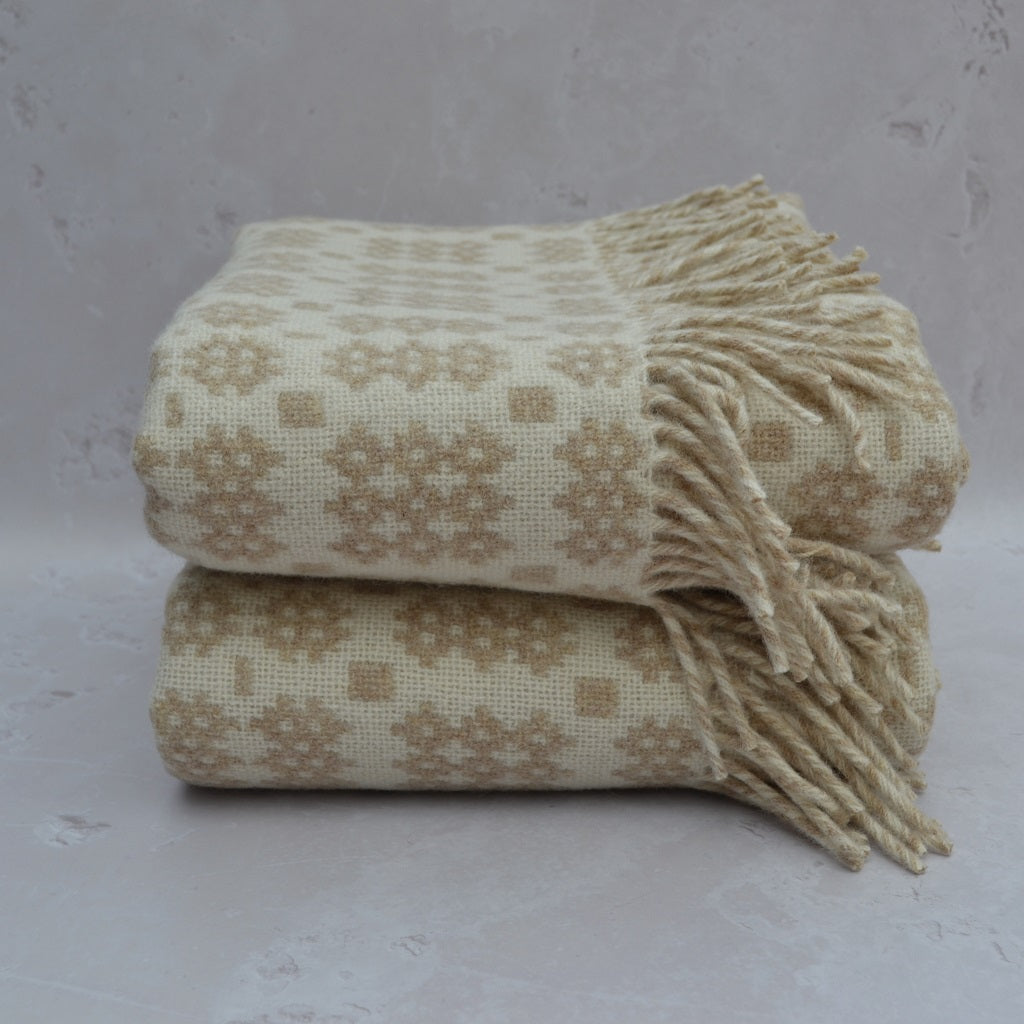
Check the fibre content too. If you want to understand the weave and pattern of your own piece before cleaning it, our guide to Welsh blanket patterns explains the Caernarfon, Pennsylvania and Dyffryn designs. You can also browse our pure wool Welsh blankets to compare fibre and construction.
Wool care and fibre guidance from The Woolmark Company
How to Hand-Wash a Wool Blanket Step by Step
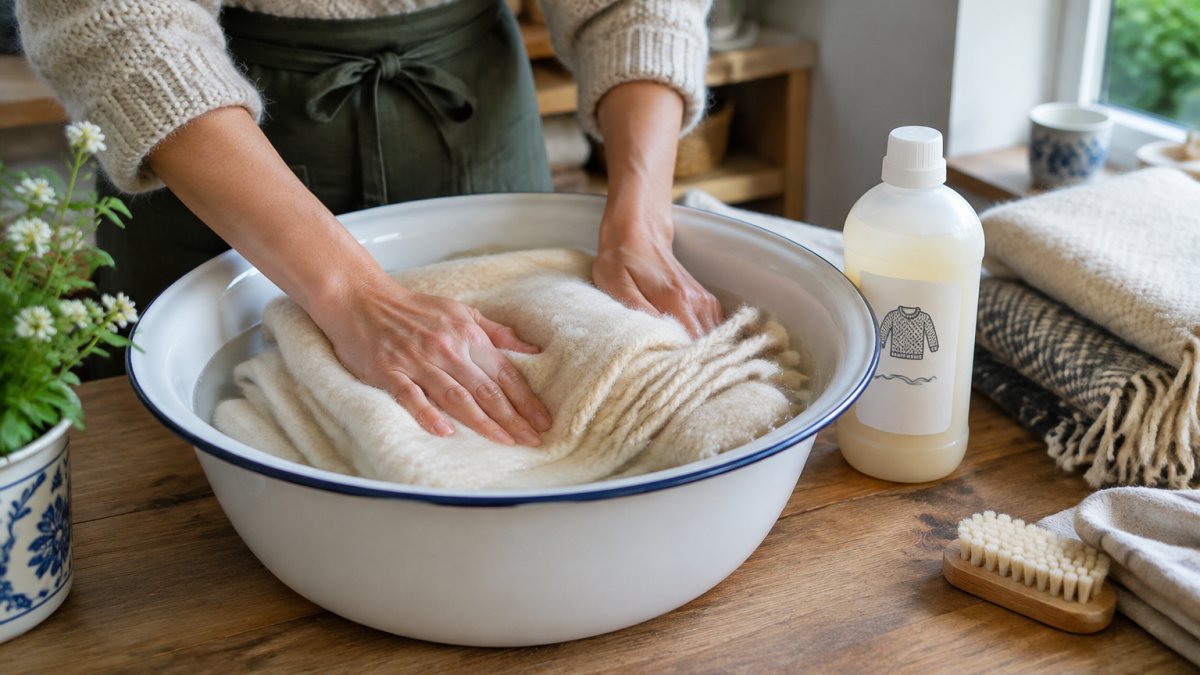
Hand washing is the safest method for any wool blanket marked hand wash. Work quickly, keep the water cool, and never rub the fibres.
- Shake out loose dust outdoors before washing.
- Fill a basin with lukewarm water below 40°C.
- Add a wool-specific detergent and swirl it in gently.
- Submerge the blanket and soak for 10 to 15 minutes.
- Press, don't scrub. Squeeze water through the fibres with flat hands.
- Rinse in clean water at the same temperature.
- Roll in a towel to lift excess water.
- Dry flat, away from direct heat.
If you are washing one of our double-weave pieces, check the Claerwen blanket details first for fibre and construction guidance.
Here is the hand-washing sequence at a glance, from shaking out dust to drying flat.
| Step | What to do | Time or note |
|---|---|---|
| 1 | Shake out loose dust outdoors | Before washing |
| 2 | Fill a basin with lukewarm water | Below 40°C |
| 3 | Add wool-specific detergent and swirl gently | , |
| 4 | Submerge the blanket and soak | 10 to 15 minutes |
| 5 | Press, don't scrub, with flat hands | , |
| 6 | Rinse in clean water | Same temperature |
| 7 | Roll in a towel to lift excess water | , |
| 8 | Dry flat, away from direct heat | , |
Can You Machine-Wash a Wool Blanket?
Sometimes, yes, but only if the care label allows it.
Watch out: a normal cotton cycle will felt a wool blanket in a single wash. There is no fix once it happens.
How to Dry a Wool Blanket Without Shrinking It
Dry flat is the rule. Lay the blanket on a clean towel or drying rack and reshape it while damp. Keep it away from radiators, direct sun and tumble drying. Heat is what causes shrinkage and fading.
How to Remove Stains from a Wool Blanket
Blot, never rub. Use a soft cloth and cold water for most marks. For tougher stains, add a drop of mild soap and work from the outside in.
- Pet odour: air the blanket outdoors, then spot clean
- Food or drink: blot immediately with cold water
- Grease: a small amount of wool-safe detergent on a soft cloth
Dos and Don'ts for Wool Blanket Care
- Do air your blanket regularly to freshen it
- Do fold and store it clean and dry
- Don't wring, scrub or tumble dry
- Don't use bleach or harsh detergent (Best detergent to use when washing wool)
Cleaning pure wool takes patience, not products. If you would rather start with a blanket made to last, explore our pure new wool range at TirGlas, woven in small batches with fibre you can trace. Get started with TirGlas and care for a piece that stays with you for years.
Frequently Asked Questions
Can you wash a pure wool blanket in a washing machine?
Only if the care label allows it. Skip the tumble dryer entirely. Many pure new wool blankets, including double-weave Welsh blankets, are labelled dry clean only, so hand-washing or professional cleaning is safer. If in doubt, hand-wash or check with a specialist cleaner before machine-washing.
How do you dry a pure wool blanket without shrinking it?
Gently press out excess water by rolling the blanket in a clean towel, never wringing it. Reshape it to its original dimensions and dry flat on a clean towel or drying rack, away from direct heat and sunlight. Turn it occasionally so both sides dry evenly. Never tumble dry or hang a wet wool blanket, as the weight will stretch it out of shape.
How often should you wash a pure wool blanket?
Wash pure wool blankets infrequently, when visibly soiled. Between washes, air the blanket outdoors on a dry day to freshen it and remove light odours. Spot-clean small marks straight away with a damp cloth and mild detergent. Frequent washing can cause pilling and fading, so airing and spot cleaning are kinder to the fibres.
